Source Mirror Finished Combination Wrench for Auto Repair, Plumbing, and Assembly
Compare 30 mirror finished combination wrench options from verified suppliers. Buyers can evaluate specifications like size ranges, material types including chrome-vanadium steel, and surface treatments to find the right tool for industrial maintenance tasks.
Key considerations
Products List





Comprehensive Sourcing Guide
Strategic Sourcing Guide for Mirror Finished Combination Wrenches
Technical Specifications and Material Integrity
When sourcing a mirror finished combination wrench, the primary technical focus must be on the material composition and the specific finishing process that defines the product's aesthetic and functional longevity. Based on the available product data, the core material for these tools is frequently identified as Chrome-vanadium Steel. This alloy is critical because it offers a superior balance of tensile strength and toughness, which is essential for a tool designed to withstand high torque without snapping. The presence of chrome-vanadium steel suggests a manufacturing intent focused on durability, as this material is inherently resistant to corrosion and wear compared to standard carbon steel alternatives. However, the supply chain also lists Carbon Steel and Stainless Steel as potential materials, indicating that buyers must explicitly verify the specific alloy grade before placing an order. The distinction between these materials is significant; while carbon steel may be used for cost-sensitive applications, it requires more rigorous surface treatments to prevent rust, whereas stainless steel offers inherent corrosion resistance but may differ in hardness characteristics.
The defining characteristic of the target product is the "Mirror Finish." In the context of industrial tooling, this finish is achieved through a specific surface treatment process, often involving polishing or electroplating. The provided data confirms that "Chrome" is a standard surface treatment applied to these items, which directly contributes to the mirror-like appearance. This chrome plating serves a dual purpose: it provides the visual aesthetic of a high-end tool and acts as a protective barrier against the elements. The data also notes the existence of a "Matt Finish" option within the same product category, highlighting that the mirror finish is a specific, selectable attribute rather than a universal standard for all combination wrenches. Buyers must ensure that the supplier explicitly confirms the mirror finish specification to avoid receiving a standard satin or matte product. Furthermore, the "American Type" and "Metric, European Type" standards are both observed in the market, meaning the geometry of the wrench jaws will vary significantly. A mirror finish on an American Type wrench will have different dimensional tolerances compared to a Metric European Type, and these differences must be clearly defined in the purchase order to ensure compatibility with the intended fasteners.
Compliance, Certification, and Standard Verification
Navigating the compliance landscape for combination wrenches requires a rigorous verification of standards and certifications, as the market data presents a mix of regional standards and third-party validations. The observed product listings reference "American Type" and "Metric, European Type" standards, which dictate the dimensional geometry of the tool. Additionally, specific size ranges such as "6-24mm," "6-27mm," and "6-32mm" are noted, indicating that the "Standard" attribute often refers to the size range covered by a set or the specific sizing convention (Metric vs. Imperial). Buyers must verify that the supplier's "American Type" or "Metric" designation aligns with the fastener standards used in their specific region or industry. For instance, a wrench labeled as "American Type" may not fit a metric bolt, leading to potential tool damage or safety hazards.
Regarding certifications, the data explicitly lists "CE" and "ISO" as available certifications for these products. The CE marking indicates conformity with health, safety, and environmental protection standards for products sold within the European Economic Area, while ISO certification suggests adherence to international management system standards. However, the data also mentions "ISO9001:2000" as a low-confidence background fact, which implies that while quality management systems are relevant, the specific version or current status of the certification should be independently verified by the buyer. It is crucial to note that the presence of a certification label on a product listing does not guarantee that every unit in a batch is certified; rather, it indicates the supplier's capability or the product line's compliance history. Buyers should request valid, up-to-date certification documents directly from the supplier to confirm that the specific batch of mirror finished combination wrenches meets the required regulatory thresholds for their target market. The "CE" standard is particularly relevant for European markets, while other regions may have different requirements that are not explicitly listed in the general product data.
Cost Drivers and Pricing Dynamics
The pricing structure for mirror finished combination wrenches is influenced by a complex interplay of material costs, finishing processes, and order volume. The observed price range in the market spans from $0.01 to $103 USD, a vast disparity that reflects the difference between single-unit retail prices and bulk wholesale rates. This wide range suggests that the cost per unit is highly sensitive to the quantity ordered. The Minimum Order Quantity (MOQ) data shows a range from 1 to 3000 units, indicating that suppliers are flexible but that significant cost savings are likely realized only at higher volumes. For a buyer seeking a mirror finished combination wrench, the cost drivers are primarily the chrome-vanadium steel content and the labor-intensive polishing required to achieve the mirror finish.
The "Chrome" surface treatment and "Mirror Finish" are value-added processes that increase the manufacturing cost compared to a standard matte or unpolished tool. The data also highlights "Customization" as an available feature, which includes options for "Laser Brand Logo" and specific "Packing" solutions like "Slide Card," "Canvas Pouch," or "Colour Box." These customization options will inevitably add to the unit cost. Furthermore, the "Standard Packing" versus specialized packaging like "Cartons Boxes/Wooden Boxes" will impact the final landed cost. Buyers should anticipate that a single-item purchase will carry a significantly higher unit price compared to a bulk order of 3000 units. The "Selling Units" being listed as "Single item" suggests that the base price point is accessible for small-scale procurement, but the economic efficiency of the mirror finish is best realized in larger orders. It is essential for buyers to negotiate based on the total volume and the specific customization requirements, as the base material and finish costs are fixed, but the packaging and branding costs are variable.
Typical Applications and Functional Usage
The functional application of mirror finished combination wrenches is primarily centered on manual mechanical tasks, as indicated by the "Working Mode: Manual" attribute. These tools are designed for "Adult" use and are categorized under "Tool Repair" and general mechanical maintenance. The "Feature: Ordinary" designation suggests that these are standard-duty tools rather than heavy-duty industrial equipment, although the "Anti-Explosion" feature noted in some listings indicates a specialized variant for hazardous environments. The mirror finish, while aesthetically pleasing, also serves a functional purpose by making the tool easier to clean and less prone to trapping grease and debris, which is beneficial in maintenance scenarios where cleanliness is prioritized.
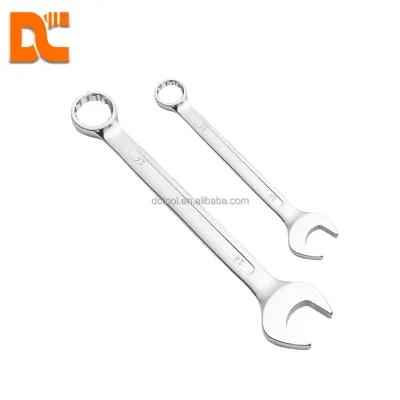
The "Type: Combination Wrench" and "Type: Open Spanner" classifications indicate that these tools are versatile, offering both open-end and box-end capabilities in a single unit. This design allows for a wide range of applications, from tightening bolts in tight spaces to general assembly work. The "Folded: Unfolded" attribute confirms that these are rigid, non-folding tools, which is standard for combination wrenches to ensure maximum torque transmission. The "Handle Color: Pure" and "Color: Silver" attributes suggest a uniform, professional appearance that is often preferred in commercial and industrial settings where brand image and tool visibility are important. The "Application Age: Adult" specification reinforces that these tools are intended for professional or serious hobbyist use, requiring a level of physical strength and technical skill to operate safely. Buyers should consider the specific environment in which the wrenches will be used; for instance, the "Anti-Explosion" feature would be critical in oil and gas or chemical processing facilities, whereas a standard chrome-vanadium wrench would suffice for general automotive or machinery repair.
Supplier Evaluation and Sourcing Strategy
Evaluating suppliers for mirror finished combination wrenches requires a careful assessment of their geographic origin, production capabilities, and customization flexibility. The data indicates that products originate from "Guangdong, China" and "Zhejiang, China," both of which are major manufacturing hubs for hardware and tools. These regions are known for their extensive supply chains and competitive pricing, but buyers must verify the specific factory capabilities to ensure quality consistency. The "Customization: Available" and "Support Customized: Logo" attributes suggest that suppliers are willing to tailor products to specific buyer requirements, which is a positive indicator of flexibility. However, the "More details: please contact us" note implies that specific technical details or customization options may not be fully disclosed in the initial listing, necessitating direct communication to clarify capabilities.
When selecting a supplier, buyers should prioritize those who can provide clear evidence of their "Chrome" surface treatment process and their ability to maintain the "Mirror Finish" consistency across large batches. The presence of "CE" and "ISO" certifications in the data is a strong positive signal, but buyers should verify the authenticity and scope of these certifications. Additionally, the "Condition: New" attribute confirms that the products are not refurbished or used, which is a baseline expectation for new procurement. The "Standard Packing" and various packaging options like "OPP Bag" or "Colour Box" indicate that suppliers have established logistics and packaging workflows. Buyers should evaluate the supplier's ability to handle the "prod_packing" requirements, such as "Slide Card" or "Canvas Pouch," to ensure the tools arrive in the desired condition. It is also important to consider the "Lead Time" and "MOQ" constraints, as the observed MOQ range of 1 to 3000 units suggests that suppliers may have different production schedules for small versus large orders.
Quality Control and Long-Term Procurement Considerations
Ensuring the quality of mirror finished combination wrenches involves a multi-layered approach to quality control, focusing on material integrity, finish consistency, and dimensional accuracy. The "Mirror Finish" is particularly susceptible to defects such as uneven polishing, scratches, or plating imperfections, which can compromise both the aesthetic and the protective qualities of the tool. Buyers should implement a rigorous inspection protocol that includes visual checks for surface uniformity and physical tests for hardness and torque resistance. The "Material: Chrome-vanadium Steel" specification should be verified through material testing reports to ensure the alloy composition meets the required standards for strength and durability.
Long-term procurement considerations for these tools involve managing the relationship with suppliers to ensure consistent quality over time. The "Customization" and "Logo" options suggest that buyers may be looking to build a branded product line, which requires a supplier who can maintain consistency in branding and packaging over multiple production runs. The "Standard: American Type" and "Metric, European Type" variations mean that buyers must maintain clear documentation of the specific standards required for each order to avoid mix-ups. The "Feature: Ordinary" and "Anti-Explosion" distinctions highlight the need for precise specification management, as these features significantly alter the tool's intended use and safety profile. Buyers should also consider the "Product Model" variations, such as "KT702D," "KT701S," and "KT701," as these may represent different generations or specifications of the same tool type. Establishing a long-term partnership with a supplier who can provide consistent quality, reliable lead times, and responsive customer service is essential for maintaining a stable supply chain for these critical hand tools.
FAQs
What material is used for mirror finished combination wrenches?
The core material is frequently Chrome-vanadium Steel, offering superior tensile strength and toughness. Some listings also specify Carbon Steel or Stainless Steel, so buyers must verify the exact alloy grade before ordering to ensure durability and corrosion resistance.
Which surface treatment creates the mirror finish on these tools?
The mirror finish is achieved through a Chrome surface treatment process that involves polishing or electroplating. This plating provides a protective barrier against rust while delivering the required high-gloss aesthetic, distinct from the available Matt Finish options.
Can these wrenches be customized with specific logos or packaging?
Yes, customization is available for laser brand logos and various packaging solutions like Slide Cards or Canvas Pouches. Buyers should contact suppliers directly for details on specific packing requirements, as options range from standard OPP bags to wooden boxes.
What certifications are available for these combination wrenches?
Available certifications include CE and ISO, indicating conformity with safety and management standards. While ISO9001:2000 is mentioned in background data, buyers should request valid, up-to-date certification documents to confirm the specific batch meets regulatory thresholds for their target market.
Where are these tools typically manufactured?
Products originate from major manufacturing hubs in Guangdong, China, and Zhejiang, China. These regions offer extensive supply chains, but buyers must verify specific factory capabilities to ensure consistent quality and adherence to the stated American or Metric standards.
What is the typical price range for these tools?
The observed price range spans from 0.01 to 103 USD, reflecting differences between single-unit retail and bulk wholesale rates. Costs are influenced by material content, the labor-intensive mirror finish, and order volume, with significant savings often realized at higher quantities.